New Born emergency X-ray
Date: 2026-06-03
Accepted answers: acute respiratory failure
Explanation
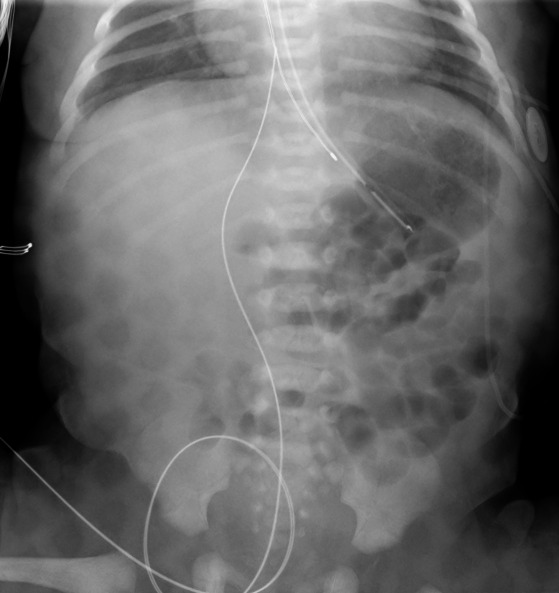
The radiograph here is essentially reassuring — clear lungs, a normal non-obstructed bowel gas pattern, and an appropriately positioned OG tube — with the striking mottled lucencies representing the thermal blanket rather than any intrinsic pathology. Acute respiratory failure requiring assistive ventilation is the leading indication for NICU admission, and adjunctive tubes such as the OG tube are commonly added to support feeding during this period. The mild gastric distension and prominent cardiothymic silhouette (from rightward rotation) are expected incidental findings rather than signs of obstruction or cardiomegaly. Recognizing the cooling-device artifact is key to avoiding misinterpretation as pulmonary or abdominal disease.
Source: Eshraghi D, Newborn acute respiratory failure. Case study, Radiopaedia.org (Accessed on 03 Jun 2026) https://doi.org/10.53347/rID-200412
Hints
- A male infant on his first day of life is in respiratory distress requiring assisted ventilation in the NICU.
- He has been placed on a cooling protocol, with an esophageal temperature probe in place for therapeutic hypothermia.
- He was delivered by cesarean section through clear fluid to a 35-year-old mother with chronic hypertension, obesity, and hypothyroidism.
- A portable film shows an orogastric tube with a normal esophageal course terminating in the mid-to-distal gastric body, placed because of concern for a prominent gastric bubble and possible obstruction.
- This presentation is the single most common reason for admission to a neonatal intensive care unit, and the supportive lines and feeding tubes seen on the film are characteristic of its management.
- The lungs are clear without focal opacity, effusion, or pneumothorax, the bowel gas pattern is normal without obstruction or pneumatosis, and a diffuse mottled pattern with rounded lucencies overlies the lower chest, abdomen, and pelvis from an external cooling device.